
Why Pattern Books Matter: Building Better Communities Through Shared Design
Great communities don't happen by accident. They are shaped by thousands of individual decisions, from the way streets connect to how front yards are planted. While zoning codes and design standards establish the rules, pattern books help answer a different question: What does good look like?
Pattern books have become an increasingly valuable tool for communities, developers, designers, and homeowners because they translate broad planning goals into practical, approachable solutions. Rather than prescribing a single design, they provide a collection of proven strategies that create neighborhoods that are more resilient, beautiful, and functional over time.
At Dix.Hite, we believe these types of resources are essential to creating places that are not only designed for today, but prepared for tomorrow.
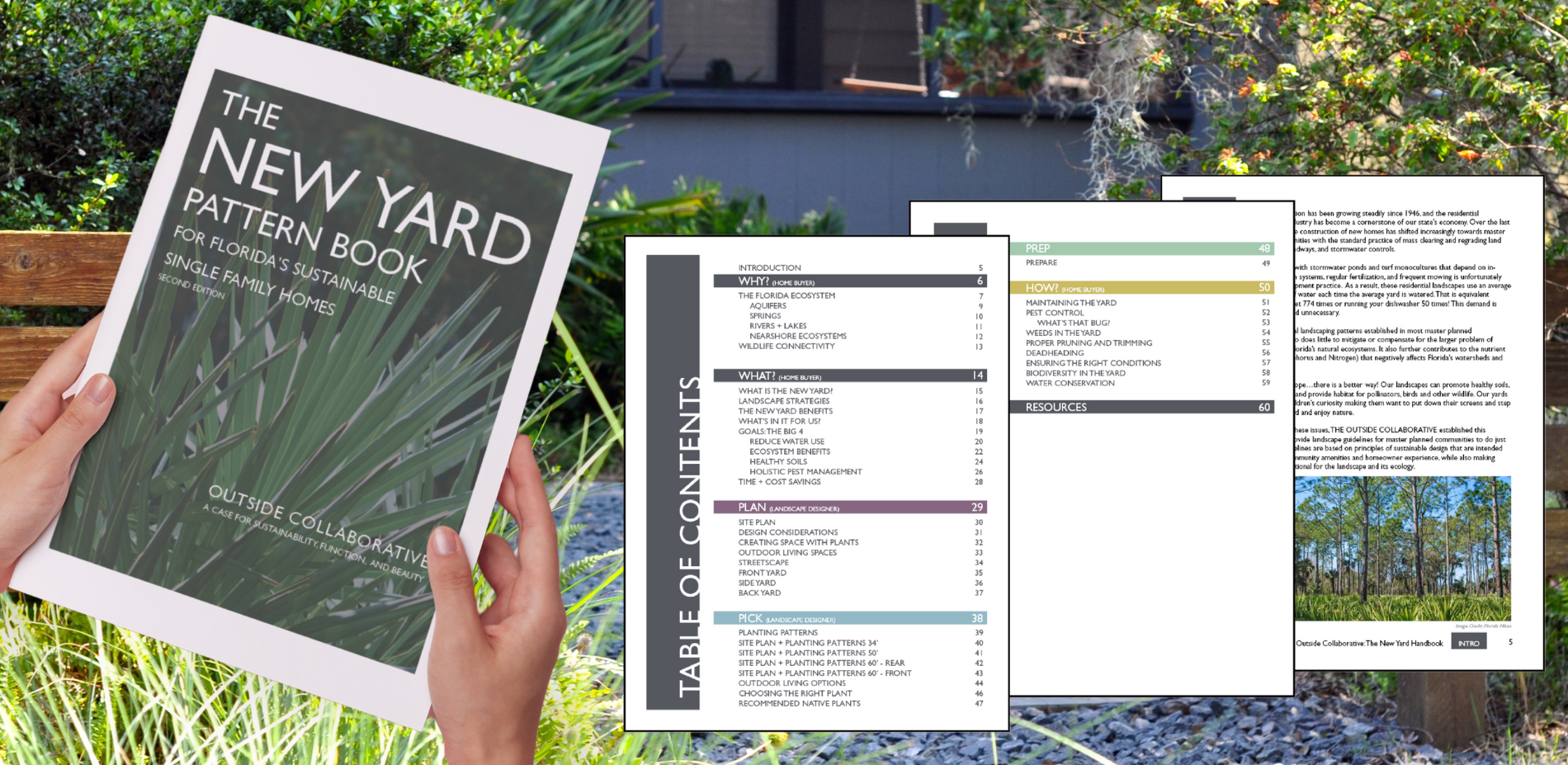
What Is a Pattern Book?
A pattern book is a design guide that illustrates best practices through real-world examples, diagrams, and implementation strategies. Unlike technical manuals or regulatory documents, pattern books are intended to be accessible to a broad audience, making them valuable for professionals and the public alike.
A well-crafted pattern book helps communities:
Create a consistent design vision across multiple projects
Improve long-term environmental performance
Simplify decision-making for developers, builders, and homeowners
Communicate design principles in an easy-to-understand format
Encourage collaboration among public agencies, design professionals, and residents
Most importantly, pattern books inspire change by showing that better solutions are achievable.
Setting the Standard
Dix.Hite often leads the creation of defining visions for communities, serving both public and private clients across a wide range of scales, from comprehensive planning frameworks to finely crafted site details, including hardscape, signage, furnishings and fixtures, and planting design. Our long-standing pattern book work with the Town of Celebration spans more than 25 years, and today, our evolving sustainable landscape patterns are being adopted by communities such as Clermont, Groveland, Lake County, and Waterlin in Osceola County, while the Town of Oakland is embracing a holistic vision that builds on its historic charm while shaping a vibrant future.
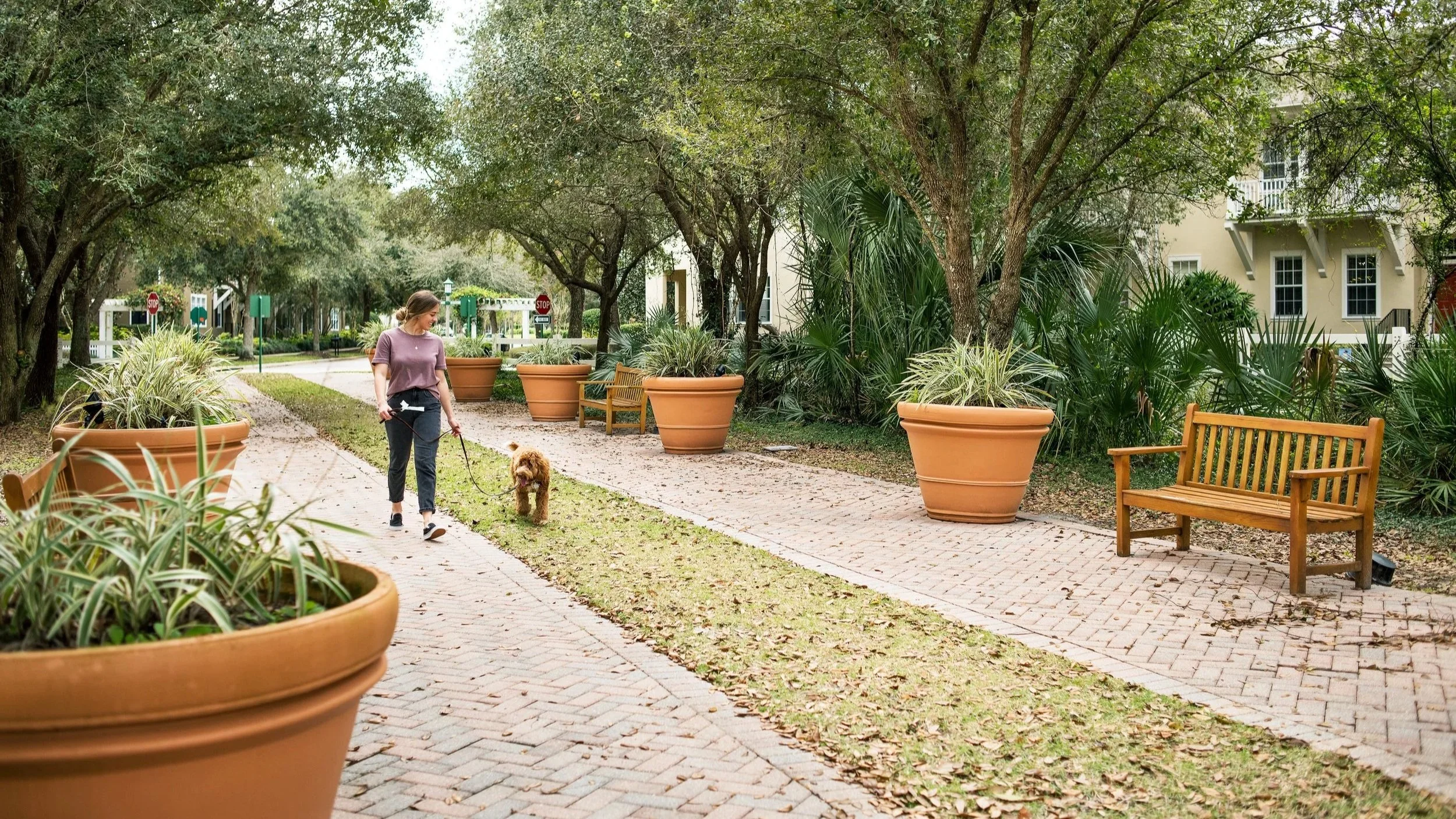
Dix.Hite was instrumental in establishing and implementing the vision for the Artisan Park village in the New Urbanist town of Celebration, Florida.
Rethinking the Florida Yard
One example pattern book Dix.Hite is especially proud to share openly and freely is The New Yard Pattern Book, developed through The Outside Collaborative, a nonprofit organization dedicated to advancing more sustainable landscapes. Dix.Hite was proud to co-author to this effort alongside a collaborative of landscape architects, scientists, growers, contractors, developers, and environmental practitioners.
The publication addresses a growing challenge across Florida.
For decades, the standard residential landscape has relied on large expanses of turfgrass and ornamental shrubs. While familiar, these landscapes often require intensive irrigation, frequent mowing, fertilizers, and pesticides to maintain their appearance. As Florida continues to grow, these conventional practices place increasing pressure on the state's limited freshwater resources while contributing to nutrient pollution that impacts springs, rivers, lakes, and estuaries.
Rather than simply identifying these challenges, The New Yard Pattern Book provides an alternative.
Designed for developers, landscape architects, builders, homeowners, and community leaders, the guide explains the why, what, and how of creating landscapes that reduce maintenance inputs while supporting healthier ecosystems.
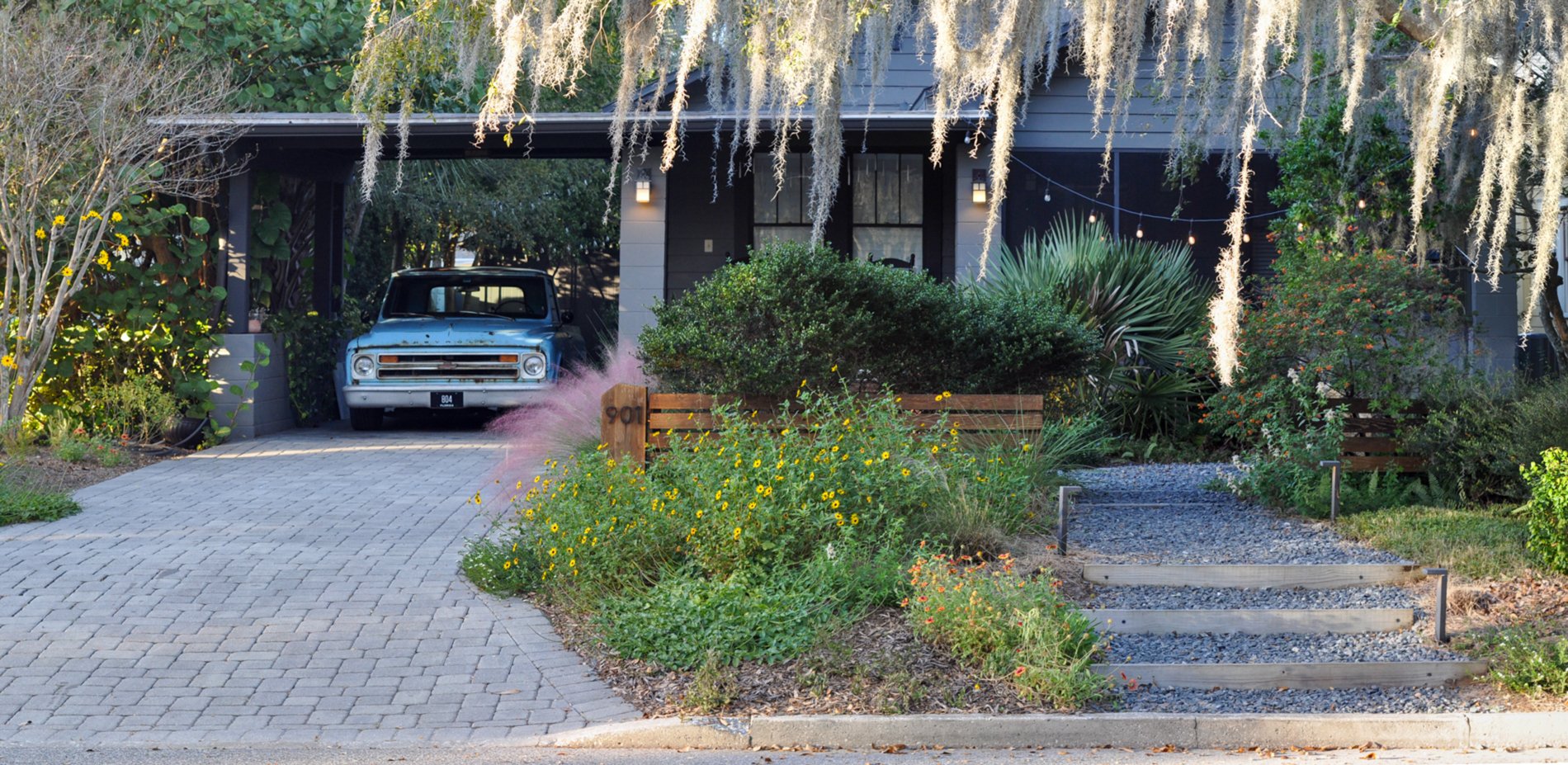
The New Yard Pattern Book guidelines are based on principles of sustainable design, form and function, maximizing the homeowner experience while promoting yards that are more functional for the homeowner and ecology.
The New Yard Pattern Book organizes its recommendations around four guiding principles that work together to create more resilient residential landscapes.
Low Water Use: By selecting locally adapted, site-appropriate plants, landscapes can dramatically reduce or even eliminate the need for permanent irrigation while remaining attractive throughout the year.
Ecosystem Benefits:Diverse plant communities that incorporate native species provide food, shelter, and habitat for pollinators, birds, and other wildlife while creating landscapes that are naturally more resilient and visually dynamic.
Healthy Soils: Healthy landscapes begin below ground. Building soils with compost and organic matter improves water retention, supports beneficial microorganisms, and reduces reliance on synthetic fertilizers.
Holistic Pest Management: Instead of depending on routine chemical treatments, healthy ecosystems naturally regulate many pest populations. Thoughtful plant selection and biodiversity create balanced landscapes that minimize the need for pesticides.
Together, these four principles shift the conversation from maintaining landscapes to stewarding living systems.
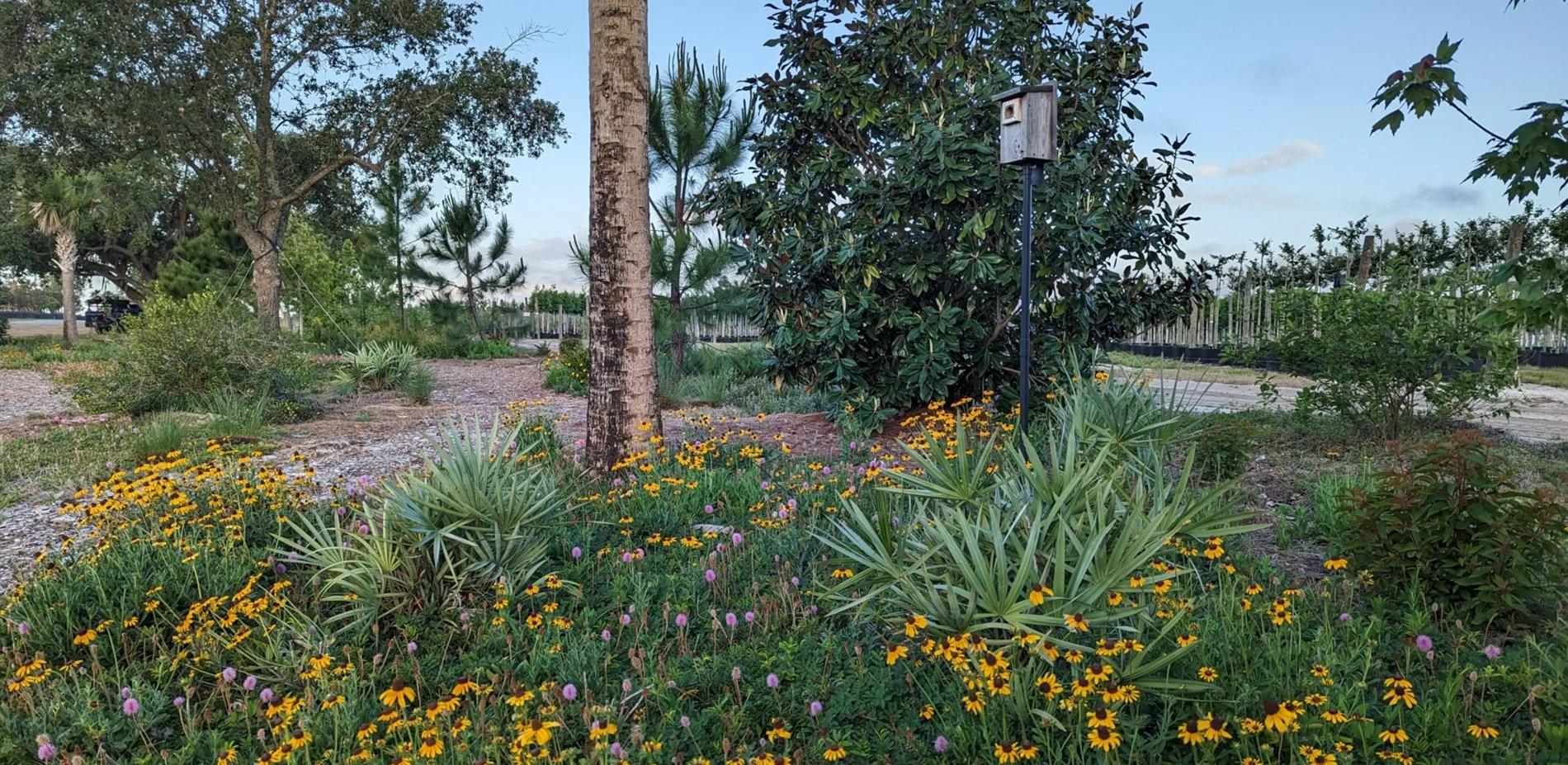
Planting techniques have been tested for ecosystem benefits, including strategies to invite pollinators, provide habitat, and to include canopy trees to sequester carbon, improve air quality and provide shade.
From Research to Real-World Change
What makes The New Yard Pattern Book especially impactful is that it is grounded in ongoing research and field testing.
The Outside Collaborative continues to evaluate biodiversity, water use, and plant performance through academically managed studies and real-world installations. Those lessons are continuously shared through the Pattern Book, public presentations, stakeholder engagement, and collaboration with communities across Florida.
By making this information freely available, the project helps bridge the gap between research and implementation, giving professionals and homeowners practical tools to make more sustainable choices.
Award-Winning Research and Communication
The impact of this work has been recognized throughout the profession.
The New Yard Pattern Book received the 2024 Florida Chapter of the American Society of Landscape Architects (ASLA Florida) Award of Merit in the Research & Communications category, recognizing its ability to advance the practice of landscape architecture through education, collaboration, and public outreach.
For Dix.Hite, this recognition reflects our commitment to sharing knowledge that extends beyond individual projects and helps improve communities across Florida.

Whether you're a homeowner looking to create a more sustainable yard, a developer planning a new neighborhood, or a design professional interested in resilient landscape practices, The New Yard Pattern Book offers practical, research-based guidance that can be applied at any scale.
Download your free copy here: https://outsidecollab.com/patternbook.pdf